
Teaching Gratitude to Kids (When It Feels So Abstract) ☺️

Lately, I’ve been thinking a lot about gratitude.

In our home, we practice thankfulness every night. Before bed, we each share something we are thankful for. It’s a sweet moment, and one I truly value. But over time, I’ve noticed something. Sometimes it feels automatic. The words come out quickly, like a to-do item we check off before lights out.

And that made me wonder.

Is gratitude really landing?
Or has it slowly turned into a routine task, without much reflection?

I don’t have a clear answer. But I do know this: gratitude is a big, abstract concept, especially for children. It’s not something you can easily explain or teach with a lesson. It’s a way of seeing the world, and that takes time.
Blog header image showing a peaceful nature scene with trees and a small pond beside the title “Teaching Gratitude to Kids (When It Feels So Abstract)” and a note that a free activity is available in English and Spanish.

A different way to think about February

February is a month centered around love and connection. This month, I’m choosing to focus gratitude on people, not things.

Instead of asking my children what they are thankful for, I’m asking who they are thankful for, and why.

A sibling.
A grandparent.
A teacher.
A neighbor.
A friend.

This way, gratitude becomes relational. Personal. Real.

A simple February gratitude idea

Ask your children to choose one person each week in February and help them show gratitude in a simple way. This doesn’t have to be big or perfect.

It can look like:

  • Drawing a picture for someone they love

  • Saying “thank you” out loud

  • Giving a hug or spending intentional time together
Small gestures are enough. The goal is awareness.

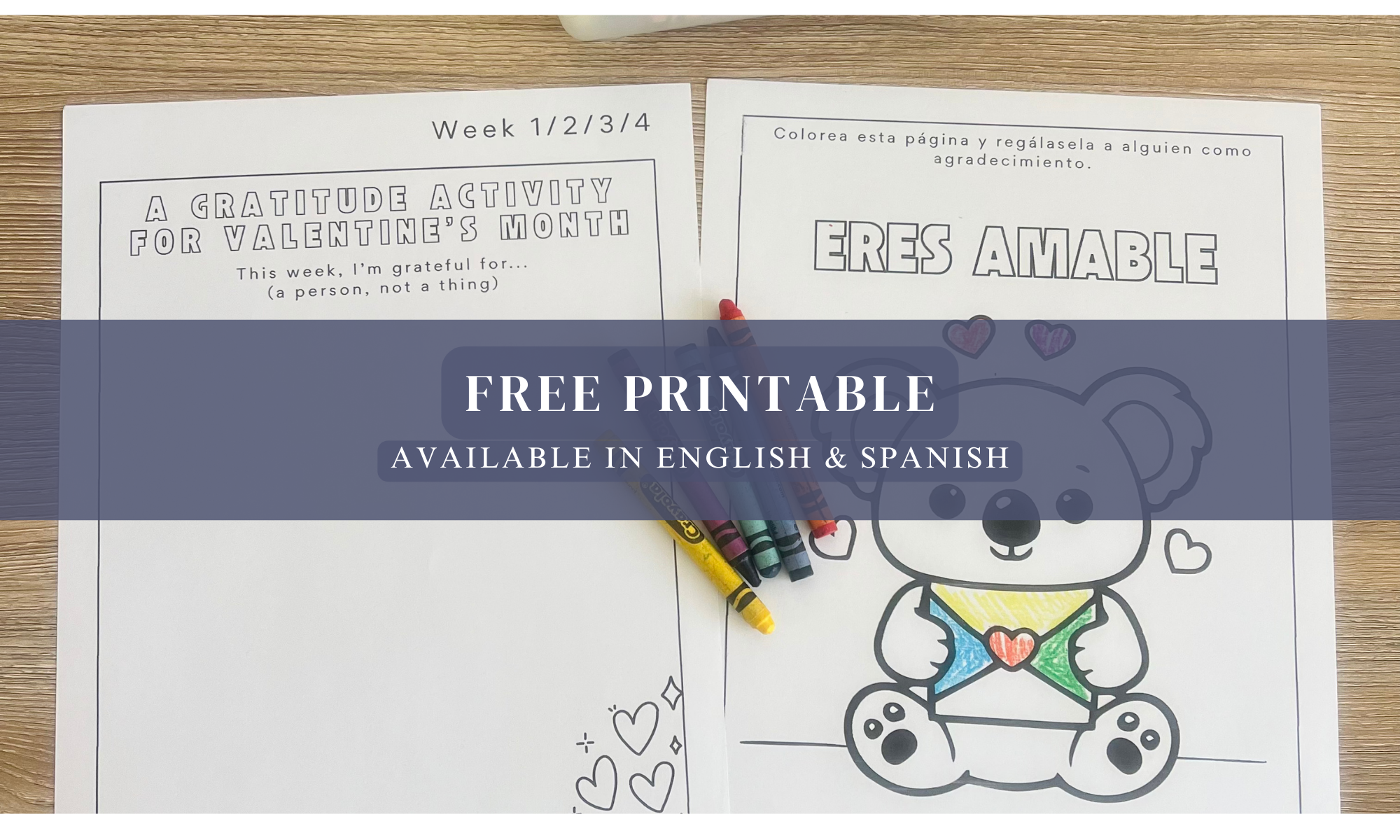
If you need ideas to get started, download the free printables I designed. Available in English and/or Spanish.

Flat lay of a free Valentine’s Month gratitude printable for kids, with coloring pages in English and Spanish, crayons, and a heart-themed activity encouraging children to express gratitude.

Making the invisible visible

Another way to practice gratitude is by helping children notice the process behind everyday things.

Who grows the food?
Who prepares the meals?
Who cleans the school?
Who delivers packages?

When children see the effort behind what they receive, gratitude grows naturally. Not because they’re told to be thankful, but because they begin to understand connection.

Letting gratitude grow slowly

I remind myself that gratitude doesn’t always appear right away. It takes time. It grows when it is modeled, named, and practiced through everyday experiences.

I’m always curious to learn and to hear what has worked in your home, what hasn’t, or if you’ve discovered another way to practice gratitude with your children. You’re welcome to send me a message or leave a comment below.

Until next time,
Monica

Next
Next

Are Kids Too Young to Practice Self-Awareness? 🤔